
Stepping into a boxing gym for the first time can be intimidating. The rhythmic thud of gloves against heavy bags, the shuffle of feet on the canvas, the focused intensity of athletes in motion – it’s a world where performance and preparation matter. And it all starts with what you wear.
The right boxing clothing does more than help you look the part. It enhances your movement, keeps you cool under pressure, and allows you to focus entirely on your technique rather than adjusting uncomfortable gear. Whether you’re a complete beginner or a seasoned fighter, here’s everything you need to know about choosing boxing clothing that works as hard as you do.
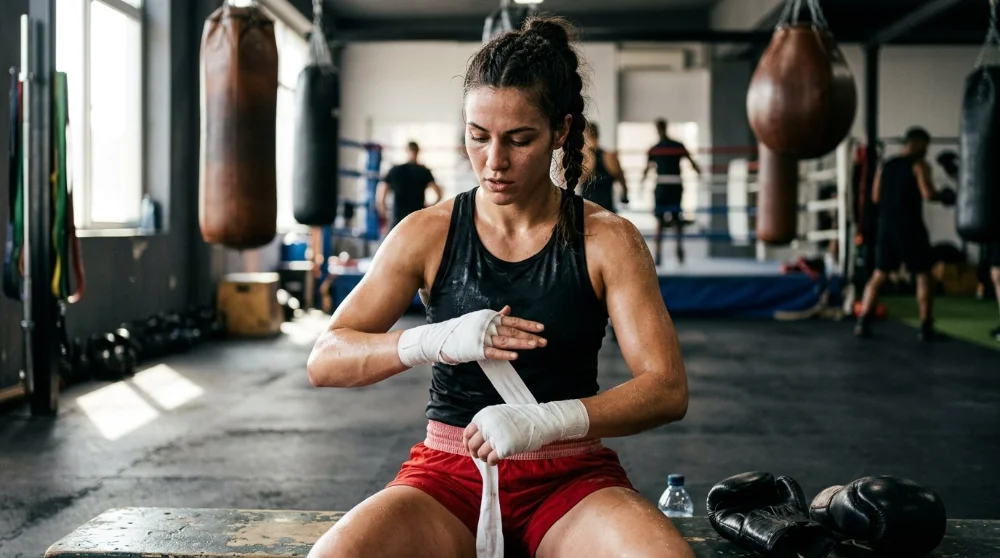
The Three Pillars: Fit, Fabric, and Function
When choosing boxing clothes, you should focus on fit, fabric, and function to maximize your performance and comfort. These three elements work together to create an outfit that supports rather than hinders your training.
Fit is paramount. You want gear that supports your movements without restricting punches or footwork. Clothing that’s too tight can cut off circulation and become a distraction, while clothing that’s too loose can impede agility and get in the way. A slim fit with enough stretch to move freely is the sweet spot. Look for designs with secure, elasticized waistbands to keep shorts or leggings in place during drills.
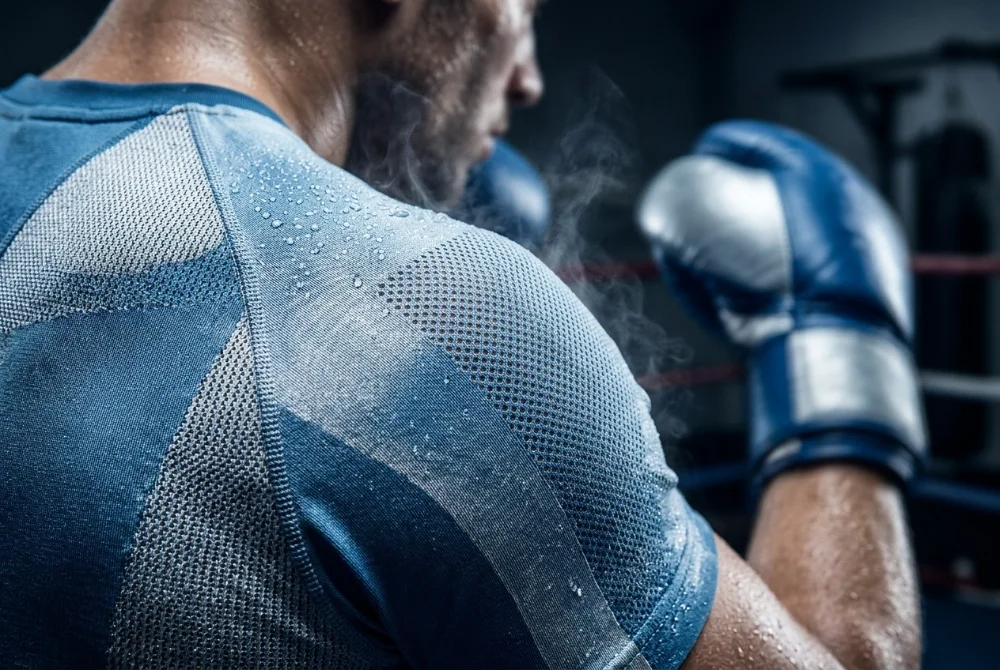
Fabric determines how your body responds to the intense demands of boxing. Moisture-wicking fabrics pull sweat away from your skin, keeping you dry throughout high-intensity sessions. Breathable materials, especially those with micro-mesh panels, improve airflow and ventilation to prevent overheating.
Function means your clothing should allow freedom of movement while offering support where needed. When these three elements align, your apparel works with your body, enhancing both comfort and performance in every round.
Fabric Matters: What to Wear and What to Avoid
Boxing isn’t static. You sweat, twist, explode, and recover—sometimes all within ten seconds. Your clothing needs to keep up without getting in the way.
The Best Fabrics for Boxing
Polyester blends dominate boxing and athletic wear for good reason. Polyester is lightweight, dries fast, and moves with you. Most advanced workout wear now uses polyester blended with spandex or elastane to create the perfect combination of flexibility and sweat management.
Nylon and spandex blends also offer excellent moisture-wicking properties, pulling sweat away from your skin to keep you dry. These materials dry faster than cotton and help prevent the heavy, damp feeling that can slow you down during intense training.
4-way stretch fabrics like spandex or elastane allow for full mobility, contouring to your body without being restrictive—especially useful for base layers or compression tops.
Tri-blends with good breathability are perfect for boxing sessions, offering lightweight comfort and performance.
Fabrics to Avoid
100% cotton may feel soft, but it holds sweat and gets heavy fast—leading to chafing and discomfort. Avoid cotton for activewear, especially during high-intensity workouts.
Thick, non-breathable synthetics that trap heat without venting should also be avoided, along with garments with poor seam construction that can irritate the skin.
The Boxing Wardrobe: Essential Pieces
Tops: Shirts and Tank Tops
When selecting a top for boxing, prioritize comfort and breathability. A lightweight, moisture-wicking shirt is ideal for boxing workouts. Technical fabrics help pull sweat away from your body, keeping you comfortable during high-intensity rounds. Even champions like Katie Taylor, known for her relentless pace and volume punching, rely on such performance fabrics to stay dry and focused through twelve gruelling rounds. What to look for: breathable performance fabrics, athletic fit without restricting movement, lightweight construction, and moisture-wicking materials. Quality boxing shirts are designed to move naturally with your punches, defensive movements, and conditioning exercises. Fitted or semi-fitted tops, sleeveless or short-sleeve training tops are all excellent choices. What to avoid: heavy cotton shirts, loose tops that flap or twist, and crop tops that ride up during drills. Baggy sleeves get in the way once you start throwing punches.
What to look for:
- Breathable performance fabrics
- Athletic fit without restricting movement
- Lightweight construction
- Moisture-wicking materials
Quality boxing shirts are designed to move naturally with your punches, defensive movements, and conditioning exercises. Fitted or semi-fitted tops, sleeveless or short-sleeve training tops are all excellent choices.
What to avoid: Heavy cotton shirts, loose tops that flap or twist, and crop tops that ride up during drills. Baggy sleeves get in the way once you start throwing punches.
Bottoms: Shorts and Leggings
Whether you choose traditional boxing shorts or athletic training shorts, mobility should always be the priority. Lightweight and breathable boxing shorts allow you to stay loose and agile. A secure waistband and plenty of leg room are essential for moving with ease and confidence around the mat https://www.hayabusafight.co.uk/blogs/community/what-to-wear-for-boxing-training.
Key features to look for:
- Lightweight, breathable fabric
- Secure waistband that stays in place
- Plenty of leg room for unrestricted movement
- Mid-thigh length (popular in boxing because it doesn’t restrict knee movement)
Athletic shorts, leggings, or lightweight joggers are all excellent options, provided they allow full range of motion. Your shorts should allow full leg movement without riding up or restricting your hips.
What to avoid: Jeans, tight fashion shorts, anything with zips, buttons, or hard materials. Loose shorts can catch on your knees during footwork drills.
Rash Guards: The Ultimate Base Layer
When paired with a rash guard, you create the ultimate boxing outfit. Rash guards are typically made of sweat-wicking materials to prevent chafing and promote comfort. They also provide a compressive fit that helps with blood circulation and muscle fatigue.
Rash guards deliver a streamlined fit with features like silicone waistbands to secure them in place as boxers shuffle and pivot.
Footwear: Don’t Overlook Your Foundation
Footwear is extremely important in boxing. Dedicated boxing shoes are designed to support quick directional changes and efficient movement around the gym floor.
Ideal footwear options:
- Boxing shoes
- Lightweight cross-training shoes
- Indoor trainers with good grip
What to avoid:
- Running shoes with thick soles (raised heels throw off your balance during pivots)
- Outdoor shoes with dirt or rocks
- Casual sneakers
If you’re training regularly, upgrading to specialized boxing footwear can significantly improve your overall experience. For beginners, flat-soled cross-trainers give you better grip and stability when shifting weight from foot to foot.
Proper shoes help with balance, footwork, pivoting safely, and reducing ankle strain.
Protective Gear: The Non-Negotiables
Hand Wraps
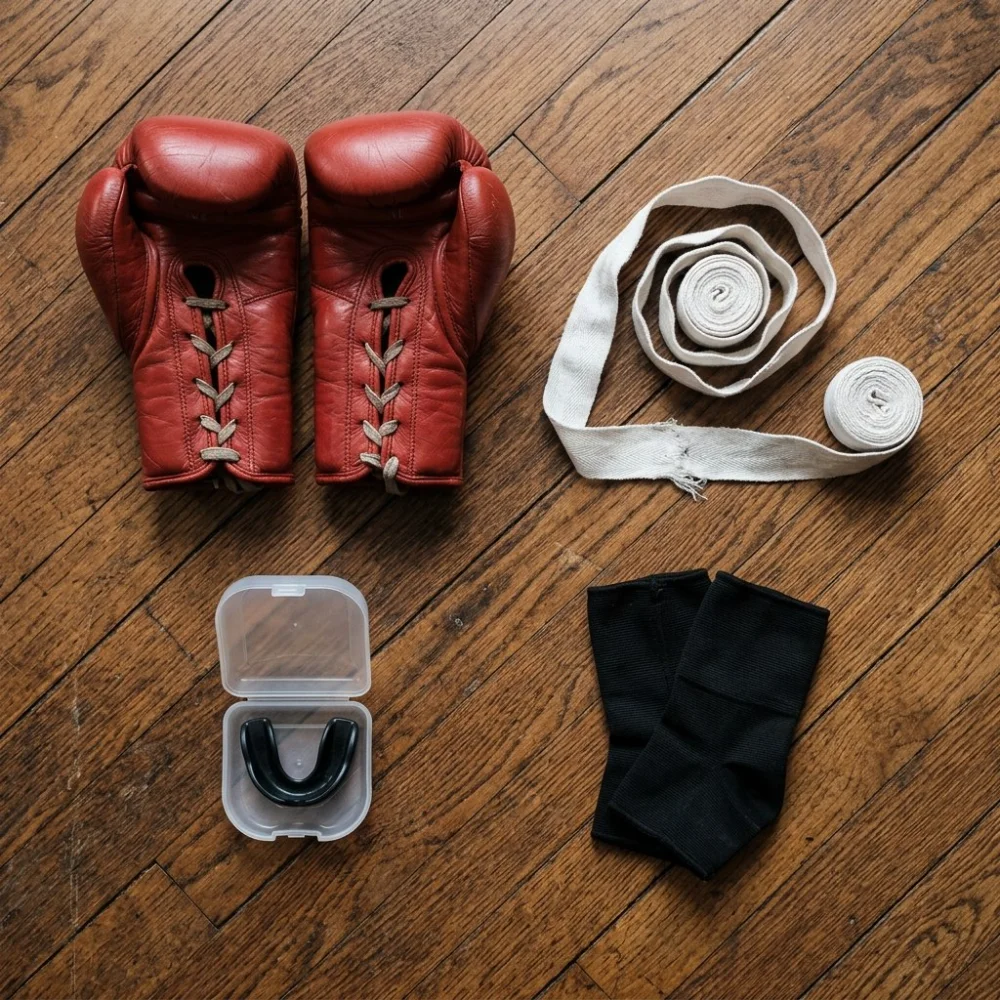
Hand wraps aren’t optional once you’re hitting pads or a bag. They support the small bones, ligaments, and joints in your hands and wrists underneath your gloves. Skipping wraps is one of the most common ways beginners end up with sore knuckles or wrist strain.
Two main types:
- Quick wraps slip on like a glove and secure with velcro at the wrist—the easiest option for beginners
- Traditional wraps are a long strip of fabric (usually 4 to 5 metres) that you wind around your hand and wrist by hand—take longer to learn but give more precise support
Hand wraps provide wrist stabilization, knuckle protection, reduced risk of injury, and improved glove fit. Many coaches consider hand wraps essential equipment, even for beginners.
Boxing Gloves
Boxing gloves are essential for the protection of the hands, knuckles, and wrists. They provide alignment for safer, more accurate punches.
A quality pair of gloves should offer:
- Wrist support
- Knuckle protection
- Comfortable fit
- Durable construction
Glove weight for beginners: Most beginners start in 12oz or 14oz gloves, which balance protection with the ability to move your hands quickly. Gloves generally range from 10oz to 20oz, with heavier gloves offering more cushioning and lighter gloves offering more speed.
For your first class, you usually don’t need to own gloves yet. Many gyms keep loaner gloves for trial sessions. Once you commit to regular training, owning your own gloves is recommended for hygiene and comfort.
Additional Protective Equipment
As training sessions evolve, consider adding:
- Mouth guards – form-fit protection that molds to the mouth, keeping teeth and gums protected during sparring
- Headgear – protects the cheeks without compromising vision
- Groin guard – recommended in training
- Chest protector – for women in training
Training vs. Competition: Know the Difference
For Training
Training clothing should prioritize comfort, breathability, and unrestricted movement. Layers of lightweight apparel, including t-shirts, long-sleeve tees, and hoodies, are ideal when switching between environments to ensure comfort before, during, and after each gym session.
For bag work, wearing shorts or leggings with breathable tops helps regulate body temperature and support mobility for endurance throughout. For sparring, boxing shorts and rash guards are standard gear.
For Competition
Competition apparel has specific requirements that vary by governing body. Generally, boxers must wear:
- Boxing trunks that shall not be shorter than mid-thigh, not cover the knee, and not be worn above the belt line
- Shorts without pockets or openings
- A sleeveless form-fitting rash guard, sports bra, or other similar garment
- Uniforms predominantly of the colour corresponding to their respective corner (red or blue) unless otherwise specified
- Appropriate footwear made of soft material without spikes, cleats, or heels
- A fitted mouthpiece
- A foul-proof pelvic area protector for male contestants
Boxers must wear a vest and shorts or a skirt, with the length of the shorts not shorter than mid-thigh. All boxer’s uniforms must be approved at the Sports Entry Check. Boxing weight classes guide is here: https://iesport.ie/boxing-weight-classes-guide/
The Beginner’s Approach: Start Simple
If you’re new to boxing, don’t overthink it. Most gyms provide gloves and wraps for first-timers, so you don’t need to spend anything before you know boxing is something you’ll stick with.
For your first class, you need:
- A moisture-wicking top (fitted or semi-fitted) – https://www.prettymuaythai.com.au/post/what-to-wear-to-your-first-boxing-class-a-complete-beginner-s-guide
- Athletic shorts, leggings, or lightweight joggers
- Flat-soled training shoes (not running shoes) – https://www.carbongym.com.au/2026/07/what-to-wear-to-boxing-class
- A water bottle and small towel
Leave at home:
- Jewellery (rings, necklaces, earrings)
- Watches or fitness trackers
- Baggy pants or leggings that slide
- Fashion gym wear not designed for movement
Safety always comes first. Anything that can catch, scratch, or restrict movement should be left at home.
Making the Investment
Once you’ve done a handful of classes and you’re confident you’ll keep coming back, investing in your own gear is worthwhile. A set of gloves and wraps typically runs $80 to $150, and having your own is more hygienic than relying on shared loaners long term.
If you do decide to buy, bring your gear to a class first and ask a coach to check the fit. Glove sizing varies a bit between brands. Invest in quality apparel made with premium materials and construction. Don’t ignore design details like moisture-wicking fabrics and compressive fits.
The right boxing clothing won’t throw a punch for you, but it will give you the freedom, comfort, and confidence to throw it yourself. Start with the basics, prioritize fit and fabric, and build your kit as your training progresses. Your performance—and your comfort—will thank you.